Monday, February 10, 2020

Hops and Red Admirals


                                               Red Admiral

Image result for red admiral butterfly


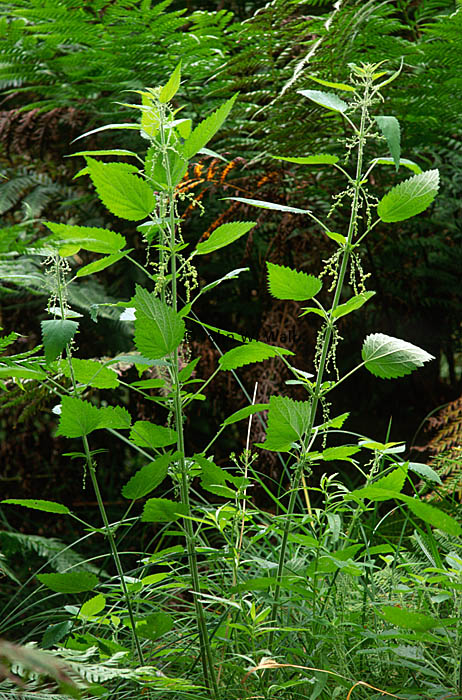
Before Europeans arrived on the scene, red admiral butterflies used stinging nettle, as pictured below.


Most stinging nettle has been removed. Although it is supposed to have healing properties, people don't like being stung, so they get rid of it. Now Red Admirals are more likely to use a common weed, pellitory, pictured below. Or hops, the picture below the stinking nettle. (host plant)

Image result for pellitory


Image result for hops

Tuesday, September 3, 2019

Passionvine

Image result for passiflora incarnata

Passion flowers are so pretty. And unusual. Great vine for the garden. And the Gulf Fritillaries lay their eggs on it. So you get butterflies, too, if you are within their range.

But in addition, you can buy passionflower extracts to help decrease insomnia or anxiety. There is some evidence that it is effective. It can also cause hallucinations and psychosis in large doses.

But don't use garden plants as a sleep aid. Some species have cyanide in them. So some are more toxic than others.

(intoxicating plants)

Sunday, August 25, 2019

Insects Get drunk?


Sarracenia flava By Stephencdickson - Own work, CC BY-SA 4.0, https://commons.wikimedia.org/w/index.php?curid=60599735


Homer wrote about nepenthe, a drug to make people feel better and forget their woes. Kind of like alcohol. People noticed that insects acted drunk after drinking nectar from a carnivorous plant, so they named it Nepenthe. There is another carnivorous plant, Sarracenia flava, that has the same substance that affects insects: coniine. However, although the insects act drunk, they are actually getting paralyzed. So maybe they are not forgetting their woes at all. Maybe they are deep into misery over their woes. Unless there is something about coniine humans don't understand. So even though we may want to think of Nepenthe or Sarracenia as intoxicating plants, they are probably just toxic. 

Why do carnivorous plants want to catch insects anyway? It turns out they live in bogs or other wet habitats where all the nitrogen is washed away. All animals have significant stores of nitrogen, so they found away to attract and trap insects, some of the smallest and most available animals. Some have a sticky surface to trap insects. The Venus Fly Trap actually closes a leaf around them. Sarracenia and Nepenthe have ways to force insects into pool of water and digestive juices in their traps so that they drown. Plant are so clever!


Saturday, July 6, 2019

Lavender

Bees on Purple Flower

Lavender has a strong smell. Some people like it, but it is too strong for me. It is used in soaps, perfumes, lotions, etc. Egyptians used it for their mummies. Romans used it for cooking and bathing. The name comes from the Latin word for "wash."

The smell is designed to deter insects. It can be used as a sachet in drawers to repel moths.

It is also psychoactive. It calms people down and helps them sleep. It can even be better than prescription anti-anxiety drugs.

There are side-effects, however. Lavender is an endocrine disrupter. It can cause enlarged breast tissue in boys. That might work for someone who is interested in a male to female transition. But others may want to steer clear.

(intoxicating) (insects)

Friday, July 5, 2019

Artemisia annua


(Photo from    GonzalezAgroGardens)

Hundreds or species of Artemisia grow around this world. But this one, Artemisia annua, is a workhorse of medicinals. The common name is Sweet Wormwood, and it has been used to kill worms as an traditional medicinal. And in fact, it does kills worms, at least the flatworms that cause schistosomiasis. Biologist Pamela Weathers found that a tea made from Sweet Wormwood was more effective at curing the disease than the prescription drug PZQ.

This plant also works against malaria. We once had malaria in the USA, but we got rid of it killing mosquitoes, which is the vector. A guy in Texas encouraged bats by building huge bat houses. Also, insecticides were used to kill them. And standing water was drained to reduce the areas where mosquitoes could breed. But malaria continued to be a problem in other areas of the world. For a long time, it was treated with derivatives of quinine which was extracted from the chinchona tree. But the malaria became resistant to that drug. Over 200,000 compounds were tested worldwide to fine something to fight malaria. No dice. Then To Youyou came on the scene. She studied pharmacy in school and then learned about Chinese medicinal herbs. She screened over 600 plants on mice and discovered that a chemical derived from A. annua, artemisinin, could cure malaria. She got a Nobel for her work in 2015.

Subsequently, a professor at UC Berkeley, Jay Keasling, figured out how to modify yeast so that could make artemisinin resulting in a low-cost quality product. It is now in production.

So what about sacred use? Smoke, from incense or smudging has be used around the world to cleanse spaces. Smudging was a Indian tradition before the Europeans arrived. But incense was used traditionally by the Europeans. Even Jesus got a gift of frankincense when he was born. I don't exactly see how smoke can clean anything.

And as far as intoxicating, some species are more used than others. It is supposed to make you feel calm and relaxed, like pot, but not so strong. It is also used for lucid dreaming and astral projection.

Both live plants and dried plant parts are available online.

(intoxicating, sacred, insect)

Wednesday, June 26, 2019

Cycads

Image result for cycad free stock photo

It may look like a baby palm tree, but it is not. In areas where it grows, it has even been used instead of palm fronds on Palm Sunday. But a palm is a flowering plant, and cycads are gymnosperms, which are related to pines and do not flower. However, they do have seeds and pollen, and some species in this group may have been among the first plants pollinated by insects.  And, in regards to pollen, the pollen of some cycads has been used as a narcotic.

The group is old, and lived at the same time that butterflies were coming into existence and dinosaurs were dying out. Maybe the long lost cousins of this plant were eaten by a stegosaurus.

Cycads grow around the world, mostly in the southern hemisphere, although they are found naturally in Florida and Mexico. They are also native in South America, India, Africa, and Australia.

They also grow in the Philippines and in Guam, east of the Philippines. In those areas, as in many others, the starchy parts of the plant are used for food after the toxins are carefully leached out.

This worked well, and few people got sick. However, mysteriously, many people started to get sick in the 1940s. At the time, they didn't know the cause. But after some sleuthing, it was traced back to the cycads.


During traditional feasts, the native Chamorro men ate bats boiled in milk. THE WHOLE THING: fur, bones, guts, all of it. They had done this for hundreds or maybe even thousands of years. However, during WWII, a military base was established on Guam, which brought guns to a culture that had never had them before. As a result, they could kill more bats and eat more bats. It turns out that the bats were feasting on cycads, and accumulating the toxins in their body. Then when the men ate the bats, they ingested a super sized dose and got sick.

Thankfully, as the Chamorro started eating fewer bats, the incidence of the disease decreased.

(intoxicating plants)  (sacred plant)


Friday, June 7, 2019

Papaver somniferum

Poppies are famous for opium and muffins. Supposedly, the plants used for culinary purposes have a lot less of the psychoactive chemicals. But who knows? So many cultivars and varieties, it is hard to tell. When the seedheads are cut, the latex that flows is harvested and made into opium or other drugs.                         (Intoxicating Plant)Poppy Flower, Poppy Buds, Poppy Capsules