Showing posts with label Sacred Plant. Show all posts

Friday, July 5, 2019

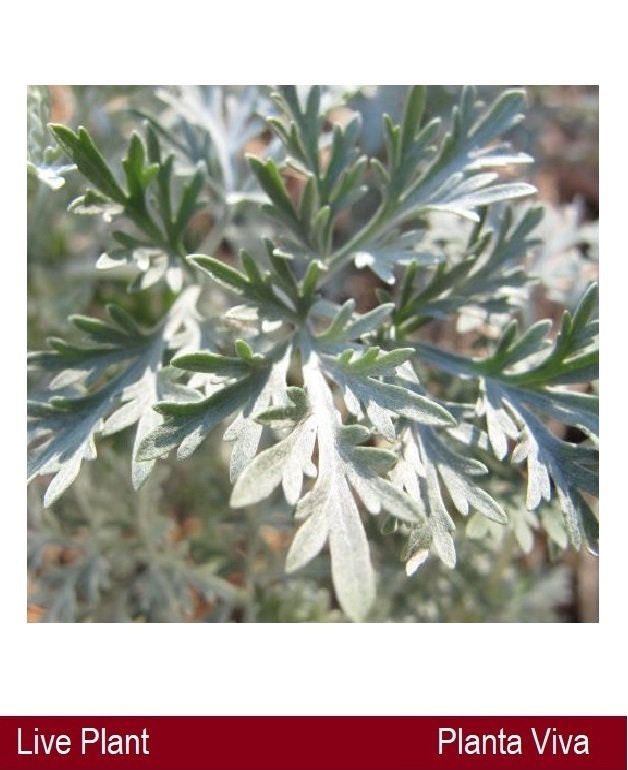
Artemisia annua


(Photo from    GonzalezAgroGardens)

Hundreds or species of Artemisia grow around this world. But this one, Artemisia annua, is a workhorse of medicinals. The common name is Sweet Wormwood, and it has been used to kill worms as an traditional medicinal. And in fact, it does kills worms, at least the flatworms that cause schistosomiasis. Biologist Pamela Weathers found that a tea made from Sweet Wormwood was more effective at curing the disease than the prescription drug PZQ.

This plant also works against malaria. We once had malaria in the USA, but we got rid of it killing mosquitoes, which is the vector. A guy in Texas encouraged bats by building huge bat houses. Also, insecticides were used to kill them. And standing water was drained to reduce the areas where mosquitoes could breed. But malaria continued to be a problem in other areas of the world. For a long time, it was treated with derivatives of quinine which was extracted from the chinchona tree. But the malaria became resistant to that drug. Over 200,000 compounds were tested worldwide to fine something to fight malaria. No dice. Then To Youyou came on the scene. She studied pharmacy in school and then learned about Chinese medicinal herbs. She screened over 600 plants on mice and discovered that a chemical derived from A. annua, artemisinin, could cure malaria. She got a Nobel for her work in 2015.

Subsequently, a professor at UC Berkeley, Jay Keasling, figured out how to modify yeast so that could make artemisinin resulting in a low-cost quality product. It is now in production.

So what about sacred use? Smoke, from incense or smudging has be used around the world to cleanse spaces. Smudging was a Indian tradition before the Europeans arrived. But incense was used traditionally by the Europeans. Even Jesus got a gift of frankincense when he was born. I don't exactly see how smoke can clean anything.

And as far as intoxicating, some species are more used than others. It is supposed to make you feel calm and relaxed, like pot, but not so strong. It is also used for lucid dreaming and astral projection.

Both live plants and dried plant parts are available online.

(intoxicating, sacred, insect)

Wednesday, June 26, 2019

Cycads

Image result for cycad free stock photo

It may look like a baby palm tree, but it is not. In areas where it grows, it has even been used instead of palm fronds on Palm Sunday. But a palm is a flowering plant, and cycads are gymnosperms, which are related to pines and do not flower. However, they do have seeds and pollen, and some species in this group may have been among the first plants pollinated by insects.  And, in regards to pollen, the pollen of some cycads has been used as a narcotic.

The group is old, and lived at the same time that butterflies were coming into existence and dinosaurs were dying out. Maybe the long lost cousins of this plant were eaten by a stegosaurus.

Cycads grow around the world, mostly in the southern hemisphere, although they are found naturally in Florida and Mexico. They are also native in South America, India, Africa, and Australia.

They also grow in the Philippines and in Guam, east of the Philippines. In those areas, as in many others, the starchy parts of the plant are used for food after the toxins are carefully leached out.

This worked well, and few people got sick. However, mysteriously, many people started to get sick in the 1940s. At the time, they didn't know the cause. But after some sleuthing, it was traced back to the cycads.


During traditional feasts, the native Chamorro men ate bats boiled in milk. THE WHOLE THING: fur, bones, guts, all of it. They had done this for hundreds or maybe even thousands of years. However, during WWII, a military base was established on Guam, which brought guns to a culture that had never had them before. As a result, they could kill more bats and eat more bats. It turns out that the bats were feasting on cycads, and accumulating the toxins in their body. Then when the men ate the bats, they ingested a super sized dose and got sick.

Thankfully, as the Chamorro started eating fewer bats, the incidence of the disease decreased.

(intoxicating plants)  (sacred plant)


Thursday, May 12, 2016

Tobacco

We think of tobacco as a horrible habit. But at one time it was a sacred plant. Almost all tribes in North America and most tribes in South America used it. It was smoked during rituals, ceremonies and social events.  It was used to connect the worlds because the it has long deep roots underground, a green plant on the surface of the earth, fire that represented the sun, and smoke that rises skyward. It was put in a fire in a sweat lodge to thank the creator.  It can be smoked during prayer to take messages to the creator and to those who have died. It was also used medicinally for stomach aches and fever.

The UC Bot Garden was very interested in tobacco circa 1920-1940. Probably mostly from a financial point of view. William Setchell (director from 1902-1928) collected pipes in San Francisco. Thomas Goodspeed (director from 1928-1954) made many trips to South America collecting a variety of Nicotiana species. The idea was to improve on the commercial tobacco with hybridization. I'm not sure which one enjoyed their field trips more.

In bloom now in the crop garden at the UC Botanical Garden.


"Nicotine acts to increase the production of other chemicals in the brain known as neurotransmitters that affect brain function. ... Nicotine also produces long-term effects on the dopamine system, which is involved in reward, mood and addiction." 

This quote is stolen from the web. 

(intoxicating plants)

Monday, September 9, 2013

Palm Tree

In Roman times, the palm frond was a symbol of victory. When generals won wars, they wore togas decorated with them.  When lawyers won cases, their offices were decorated with them. Nike and Victoria, Greek and Roman Goddesses of Victory, respectively, were often represented by palm fronds.

 Everybody knows about Palm Sunday, when Christian churches are decorated with palm fronds to commemorate Jesus' triumphant return to Jerusalem. Although I have a hard time deciphering the story, apparently he was triumphant not because he had won a war, but because he had been declared the messiah. When he rode into Jerusalem, people were waving palm fronds.

In ancient Egypt, Hathor was the cow goddess. You have probably seen her depicted with a sun between the cow horns on her head. She was the goddess of life, joy, music, dancing and fertility and her symbol was the palm.

The palm tree has been a sacred symbol for thousands of years. Now  it commonly represents a tropical vacation. Maybe that is sacred, too.

The palm below resides near the tropical house at the UC Botanical Garden.


(sacred plant)

Sunday, February 26, 2012

Sacred Succulent


There are many Gasterias in the UC Botanical Garden, but I chose this one because it is near the path and easy to photograph. They are all native to South Africa. And many of them have a "tongue" common name like cow's tongue or lawyers tongue, I suppose because the plant looks like a bunch of tongues.

This very fleshy succulent is said to repel lightning. I doubt that it does. But it is probably one of the few things left after lighting has caused a fire because all the moisture inside is protective. In Africa, repelling lighting is a very important property because they have some of the highest rates of lighting in the world. The rate is about 70 strikes/square kilometer/year. Wow!

(Sacred Plant)

Friday, January 7, 2011

Ilex vomitoria--Yaupon


Ilex vomitoria: what a name! One would think that eating this plant would make people vomit, but no. That is not the case. The story is a bit more involved.

The tree is native to the southwest US and into Mexico. The Cherokee Indians (among others) lived within this range and used the leaves to make "black drink," a ceremonial caffeinated beverage. Village officials harvested leaves and twigs before the ceremony. They lightly roasted them (just like coffee) to make the caffeine water soluble (just like coffee). Then, they boiled the plant parts until the water became brown or black, giving the infusion its name. The drink was consumed by the tribal council using a large communal cup. At the end of the ceremony, they purged, giving the plant its name. The drinking and purging was supposed to purify councilmembers and remove any anger or sin.
(Sacred Plant)

Women and children were not allowed to be involved in the preparation or consumption of black drink.

American colonists also drank a tea made from Yaupon to take advantage of the caffeine content, but they called it "cassine" or "cassina."

Several specimens of this species grow at the UC Botanical Garden, but I was unable to find one in berry or bloom. I'll have to revisit this tree.


(Intoxicating Plant)

Monday, October 11, 2010

Rhododendron kiusianum section tsutsusi


The nectar of rhododendrons is toxic. Somehow the bees can deal with it, but the humans cannot. In 401 BC, Greek soldiers ate honey from wild hives near the black sea and became sick for several days. That was just an accident. But an event in 67 BC was more like chemical warfare. Pompey's Roman armies were tempted by the same kind of honey in the same area, but this time the honey was deliberately placed by the enemy (Persians). Pompey's soldiers were so sick that they were easily killed. In 946 AD, the foes of Olga of Kieve were defeated by mead made from toxic honey.

Toxic honey has also been used in religious ritual. If you eat just a little, you hallucinate instead of getting really sick. In the 7th century BC, bee priestesses or "Melissae" revealed the future under the influence of maddening honey according to the Greek poet Homer. They ate "meli chloron" or green honey to put them in a spiritual frenzy and inspire their prophecies. Was it just toxic honey, mead made from toxic honey, or mead spiked with toxic honey? No one knows for sure.

In the 18th century, toxic honey, or "miel fou" was shipped from Turkey to European taverns where it was mixed with Ale to give it an extra kick. I guess it is no longer available, though. I couldn't find any rhodie honey on Goggle shopping. [Edit June 2019: Rhodie honey now available on the internet.]  (Sacred Plant)

I don't really think of this as Rhododendron season, this R. kiusianum is in full bloom now at the UC Botanical Garden. 

(intoxicating plant) (Human/Insect/Plant triad) (Sacred Plant) (insect)