Pale Swallowtails lay eggs on several different plants, including ash trees and coffee berry. But holly-leaf cherry is an especial favorite of mine, partly because I have actually gotten eggs on my small tree, and was able to raise them. And partly because it is simple a great plant.
There are two very closely related species, Prunus illicifolia and Prunus lyonii. Or maybe one is a subspecies of the other. One has redder fruits, and the other blacker fruits. And I think it makes little difference. The butterflies like them both, and they have similar habits. They both make fabulous evergreen hedges or small trees. In fact, I think they are great substitutes for a Eugenia hedge, which tends to get bubbly leaves from psyllids. Eugenia gets to be about 20' high, and Prunus about 30', but they can both be kept lower.
Pale Swallowtails are not the most common swallowtail around. Perhaps that is because their host plants are not planted that frequently. Perhaps if if you plant Prunus, they will come.
Saturday, April 11, 2020
Tuesday, April 7, 2020
Ceanothus and California Tortoiseshell
The California Tortoiseshell lays its eggs on Ceanothus. But only special kinds of Ceanothus. It likes the varieties with large leaves, like the one pictured here. I guess the smaller leaves don't offer enough foliage to eat.
The California Tortoiseshell has an interesting migration pattern. It likes to lay eggs on blooming Ceanothus. So, I see the adults in Berkeley in about March. But by the time the next generation emerges as adults, the ceanothus in Berkeley is generally done blooming, so the butterflies migrate east or north, looking for fresh blooms. The generations continue to higher elevations and higher latitudes, but return to Berkeley for the Ceanothus that blooms in the subsequent March.
Ceanothus is also the host plant for the Ceanothus Silk Moth, a large and beautiful moth. Although it is called the Ceanothus Silk Moth, it lays its eggs on a wide range of plants, including willow, ribes, and manzanita. It is largely a west coast species, ranging from Baja Mexico to California, Oregon, Washington, and into Canada. The adults do not feeds. I guess they put all their energy into reproduction.
Thursday, April 2, 2020
White Clover
White Clover (aka Trifolium repens) is a common lawn weed in the San Francisco Bay Area. Some people don't like it in their lawn because it can attract bees. Then, if you walk barefoot in the lawn, you can get stung. However, it is hardy, doesn't seem to need much mowing, and adds nitrogen to the soil. So, as with any plant, there are pros and cons.
However, I think it is a great plant to have because it is a host plant for Orange Sulphur butterflies. I rarely see them in flatlands Berkeley, but they are in the area, so I do recommend adding white clover to your lawn or butterfly meadow.
Kenilworth Ivy
People are always concerned when I talk about Kenilworth Ivy. They think it will overtake their garden, like ivy. But it really isn't like ivy at all. Kenilworth ivy is small, delicate, and likes shade. It is also a host plant for Buckeye butterflies. It loves growing in the cracks of steps and walls. And it is absolutely charming!
The Latin name is Cymbalaria muralis. I guess the leaves are supposed to look like cymbals. Must be some kind of cymbal that I have never seen!
Monday, March 30, 2020
Thistles
Having thistle in your garden can be work. Nobody wants to deal with a plant that can poke you, even through gloves. So I rarely see it around the neighborhood. But this patch is not far from my home. It is a favored host plant for Painted Lady butterflies, and Mylitta Crescents also use it. I remember being surprised to see a Mylitta Crescent in my back yard late one summer a few years ago. But I guess there is thistle in the neighborhood to support them. Another weed to appreciate.
Monday, March 23, 2020
Plantain and Buckeye Butterflies
When I mention plantain, people tend to think of the grocery store plantains, which look like bananas but are not as sweet. But when I am talking about butterfly host plants, I am referring to Plantago lanceolata, the common lawn weed. It grows easily in the Berkeley climate, and is a nice addition to a butterfly meadow, especially if you mow infrequently.
The butterflies seems to lay the eggs near the base of the leaf. They are difficult to collect without pulling up the whole plant. Then I never see the caterpillars feed during the day. I guess they hide in the soil during the day, and come out at night. The caterpillars have their own special beauty; they are adorned with electric blue dots at the base of the spines, which are very difficult to photograph.
It is well worth the trouble to rear buckeyes. The caterpillars are so beautiful. But the adult! When you see it flying by, it looks like a boring brown butterfly. But up close, the colors are amazing!
So please, don't think of Plantago lanceolata as a weed. Think of it as habitat.
Monday, February 10, 2020
Hops and Red Admirals
Red Admiral

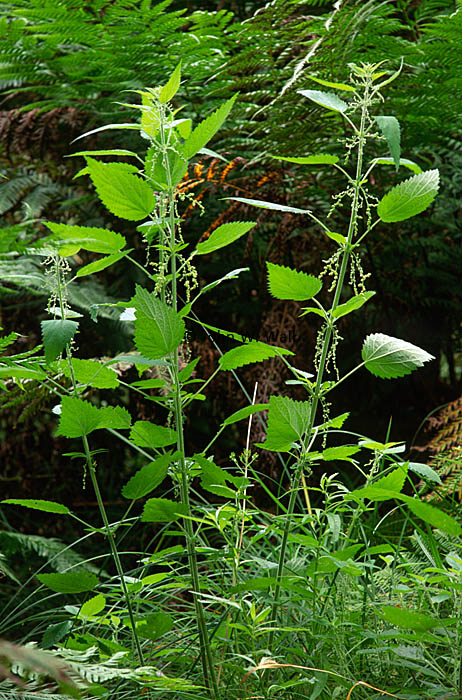
Before Europeans arrived on the scene, red admiral butterflies used stinging nettle, as pictured below.

Most stinging nettle has been removed. Although it is supposed to have healing properties, people don't like being stung, so they get rid of it. Now Red Admirals are more likely to use a common weed, pellitory, pictured below. Or hops, the picture below the stinking nettle. (host plant)
Subscribe to:
Posts (Atom)