The buds and flowers on the bush sprout directly from the main branches in Fuchsia colensoi, which is blooming now at the UC Botanical Garden. This is called "Cauliflory." Usually flowers emerge from new growth or young leafy twigs. Some plants use this method to make the flowers more accessible to pollinators and seed dispersers. Sometimes the insects and fruit eaters just can't find the flowers and fruit in the dense leafy canopy. So the plants present their reproductive organs in an obvious way, instead of keeping hiding them in the foliage. Sometimes it doesn't make sense to keep privates private!
Thursday, March 31, 2011
Fuchsia colensoi--Tree Fuchia
The buds and flowers on the bush sprout directly from the main branches in Fuchsia colensoi, which is blooming now at the UC Botanical Garden. This is called "Cauliflory." Usually flowers emerge from new growth or young leafy twigs. Some plants use this method to make the flowers more accessible to pollinators and seed dispersers. Sometimes the insects and fruit eaters just can't find the flowers and fruit in the dense leafy canopy. So the plants present their reproductive organs in an obvious way, instead of keeping hiding them in the foliage. Sometimes it doesn't make sense to keep privates private!
Tuesday, March 29, 2011
Oxalis obtusa--Sorrel
Oxalis obtusa is related to sour grass, but it has lovely pink to apricot flowers, not brassy yellow flowers like the weed we see all over Berkeley.
The name "sorrel" is a bit of a mystery to me. It is named after Rumex, which has sour leaves, just like Oxalis. They both have oxalic acid in them. But "sorrel" mean reddish-brown, not sour. So apparently the Rumex was named after its reddish-brown seed head clusters, and Oxalis was named after Rumex. Does that make sense?
Monday, March 28, 2011
Eschscholzia californica--California Poppy
California Poppies are blooming everyplace, including the UC Botanical Garden. Their bright orange silky-shiny petals are such a treat! This has been a familiar plant for so long, I thought I knew everything about it, but there is always something new to learn. Like, it can be an annual or a perennial, depending on the climate. Or, native americans used the orange pollen to color their cheeks. Or, what surprised me the most, it can be invasive. A native plant can be a weed in its native range? Crazy!
Sunday, March 27, 2011
Stachyurus praecox--Spike Tail
It reminds me of Garrya, but that is in a different family, so apparently two unrelated plants both have flower clusters that look like graceful kinetic earrings.
Both are in bloom now at the UC Botanical Garden. Stachyurus is just coming into bloom, and the Garrya is a bit past its peak of beauty. An interesting comparison.
Saturday, March 26, 2011
Picea sitchensis--Sitka Spruce
As with many other trees, it has been used for lumber and paper. But the wood is so strong and lightweight, it can be used in ways that other woods cannot. For instance, when someone builds a plane their their garage, more than likely, it will be made out of sitka spruce. You might think that Howard Huges famous aircraft, the Spruce Goose, was made out of spruce, but no, that was made mostly out of birch. However, the de Haviland Mosquito, used in WWII, was made out of Sitka Spruce, and was the fastest plane in the world when it was first manufactured. The wood is also great for ladders, oars, boats and nose cones of missiles.
The wood is very resonant and is especially useful in the manufacture of musical instruments such as pianos and guitars. Only trees over 250 years old can be used for soundboards because a large piece with no knotholes or other blemishes is needed. The trees can live to 700 years, so even a tree of 200 years is rather young.
Native Americans used the roots to make baskets and rain hats.
It is a lovely tree and is sometimes grown as an ornamental, but because it can grow more than three feet a year and get more than 100' tall, perhaps it is better for larger properties.
Friday, March 25, 2011
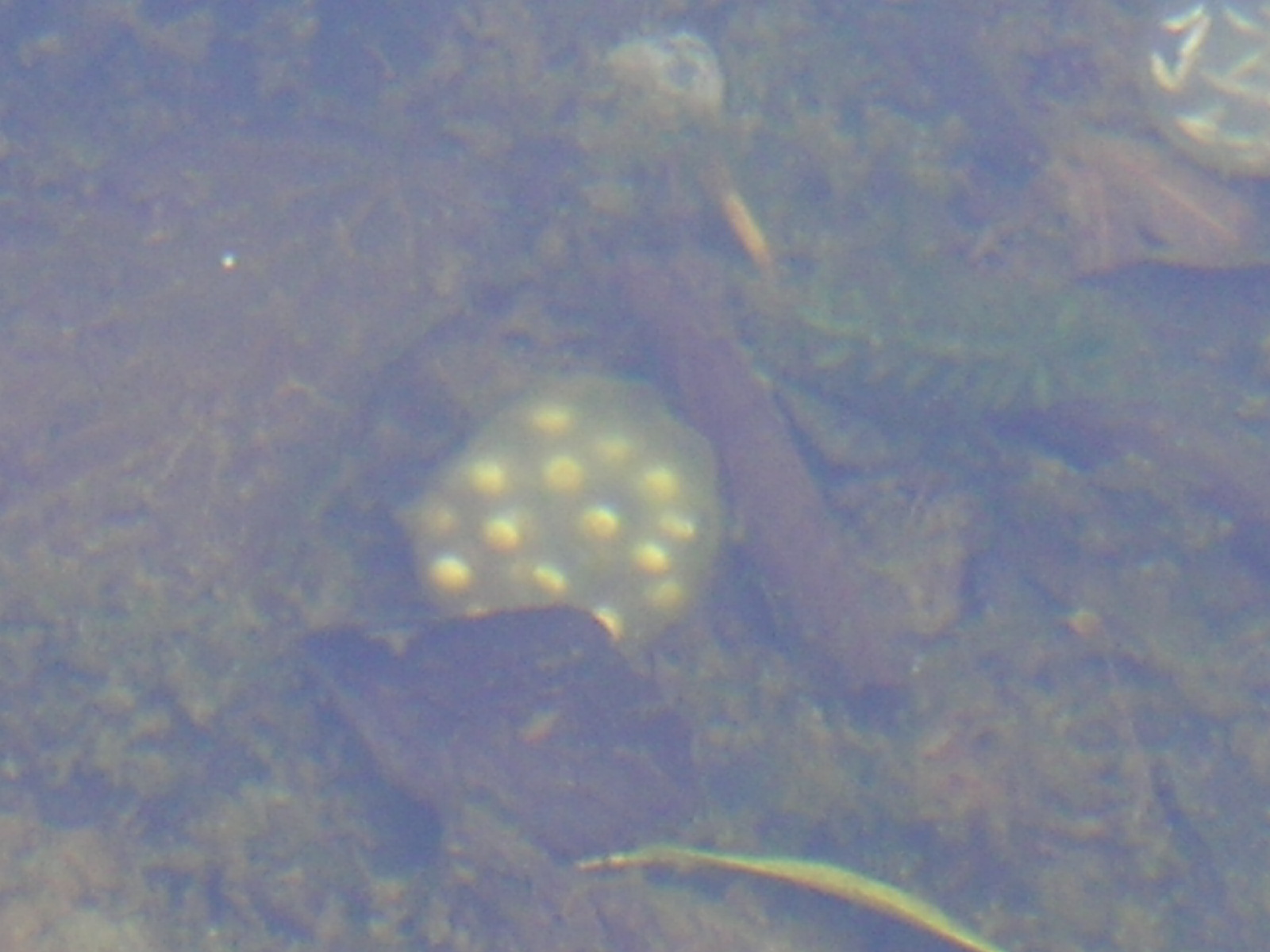
Taricha torosa--California Newt
This is an egg mass of the California Newt in the Japanese pool at the UC Botanical Garden. The eggs can be easily see within the toxic gel which protects the eggs from predators. The newts themselves are also toxic and have be use for nefarious deeds. They are so toxic that few predators eat them, but garter snakes have developed a resistance and are able to consume. them. They are also in evidence in the pond, but they are camouflaged, so it take a bit of looking to find them. When you do see them, they look very comfortable in the water, but they are also comfortable on land; they are amphibians. They generally spend February to June in the water, and the rest of the year on land, although it may take the larvae a couple of years to mature enough to leave the pond. During their migration period South Park Drive in Tilden Regional Park is closed to protect them from cars. Why does the newt cross the road? To get to the pool where it breeds.
News are predators, eating earthworms, snails, slugs, sowbugs, mosquito larvae, etc.
Some populations of newts have been reduced due to introduced species such as mosquito fish. I guess those fish have a resistance to the toxin also, and when they are introduced to kill mosquitoes, they also kill newts.
The Rough-Skin Newt also lays eggs in the garden, but that species lays eggs one at a time and wraps them in vegetation, so people are unlikely to see them.
The newts are active now and it is fun to watch their antics. I guess that is why some people keep them as pets. I wouldn't. I would not want a pet covered in toxic slime!
Thursday, March 24, 2011
Heloniopsis acutifolia
Subscribe to:
Posts (Atom)