Tea is a camellia with small white flowers. Whole books have been written about camellia sinensis, but I will limit myself to a couple of paragraphs here. One of the most interesting stories is the one that links the industrial revolution to tea. Alan Macfarlane, an anthropologist at Cambridge University postulates that the IR would never have been possible without tea. For thousands of years, people who gathered in dense communities had problems with keeping the water clean enough to drink and suffered from dysentery and other intestinal problems. To avoid the sickness, they often drank a sort of "near beer," water with a small amount of alcohol in it to make safer. The problem was, drinking alcohol at breakfast, lunch and dinner makes people a bit dumb. But with the advent of tea, people could have safe water without the alcohol. The ritual of boiling the water kills germs, but the tea is also a sort of antibiotic. Thus, people could move to cities, remain healthy, and use the full power of their brains. In addition, workers who drank tea in the afternoon could work longer because the caffeine is a stimulant. Many factors played a part in the Industrial Revolution in Britain. Perhaps tea was one factor.
Tea contains the same stimulant found in coffee, caffeine. In tea, the highest concentration of caffeine is in the youngest leaves. That is because the caffeine is an insecticide and it protects the youngest, softest, most vulnerable leaves from insects. This also means that when harvesting, the best tea is made with the youngest leaves from the tips of the branches.
(Intoxicating Plant)
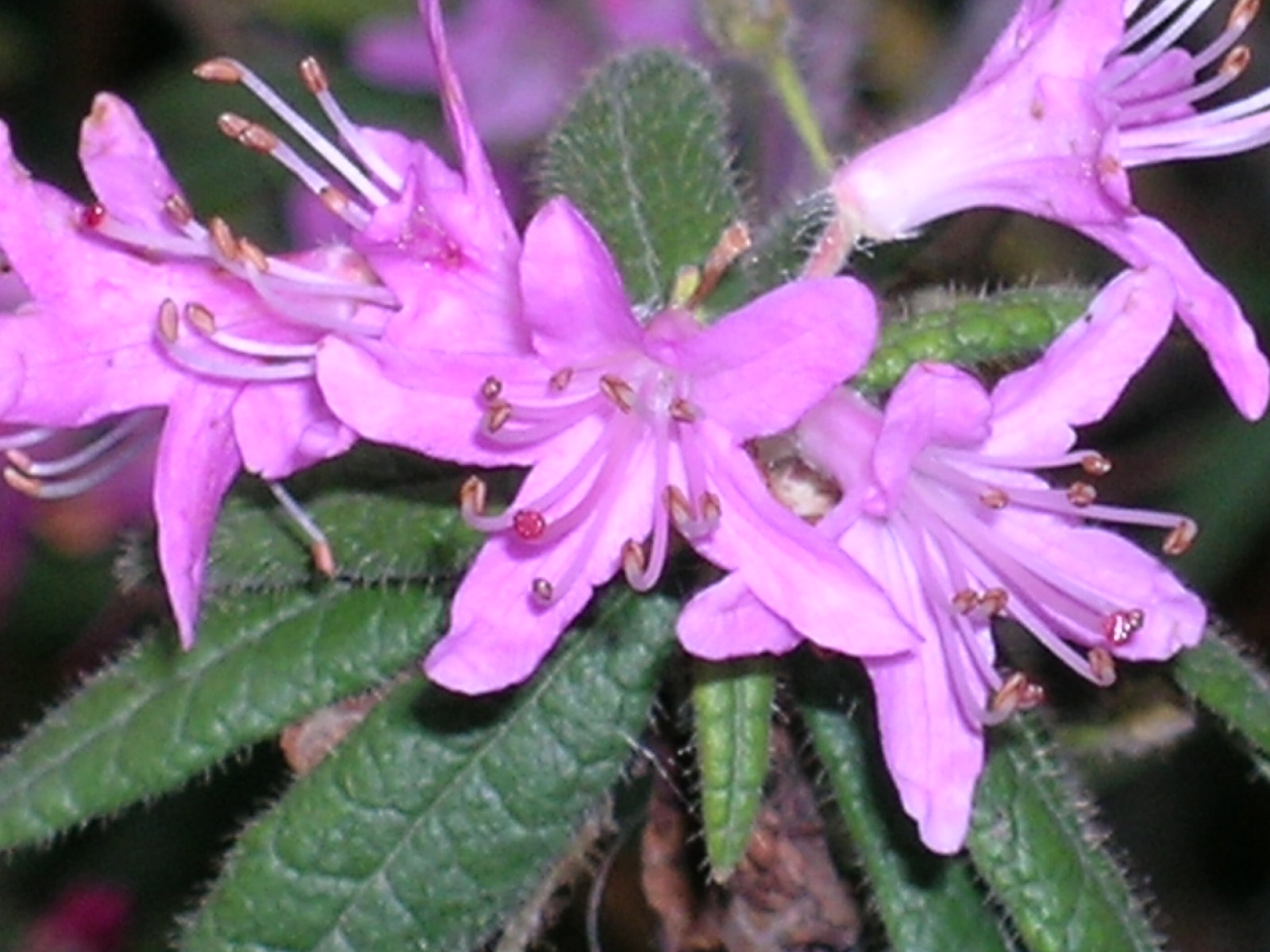

 I think of these smaller bushes with smaller flowers as Azaleas, but I guess this is a Rhododendron. So many of these Rhododendrons are now in bloom at the UC Botanical Garden! It is not even winter yet! I guess when the rains start falling, some plants think it is time to get serious about reproduction. I could find nothing about this plant besides its description, so I will just say, it is beautiful to see all the flowres among the beautiful fall leaves.