Saturday, November 20, 2010

Red Bordered Pixie


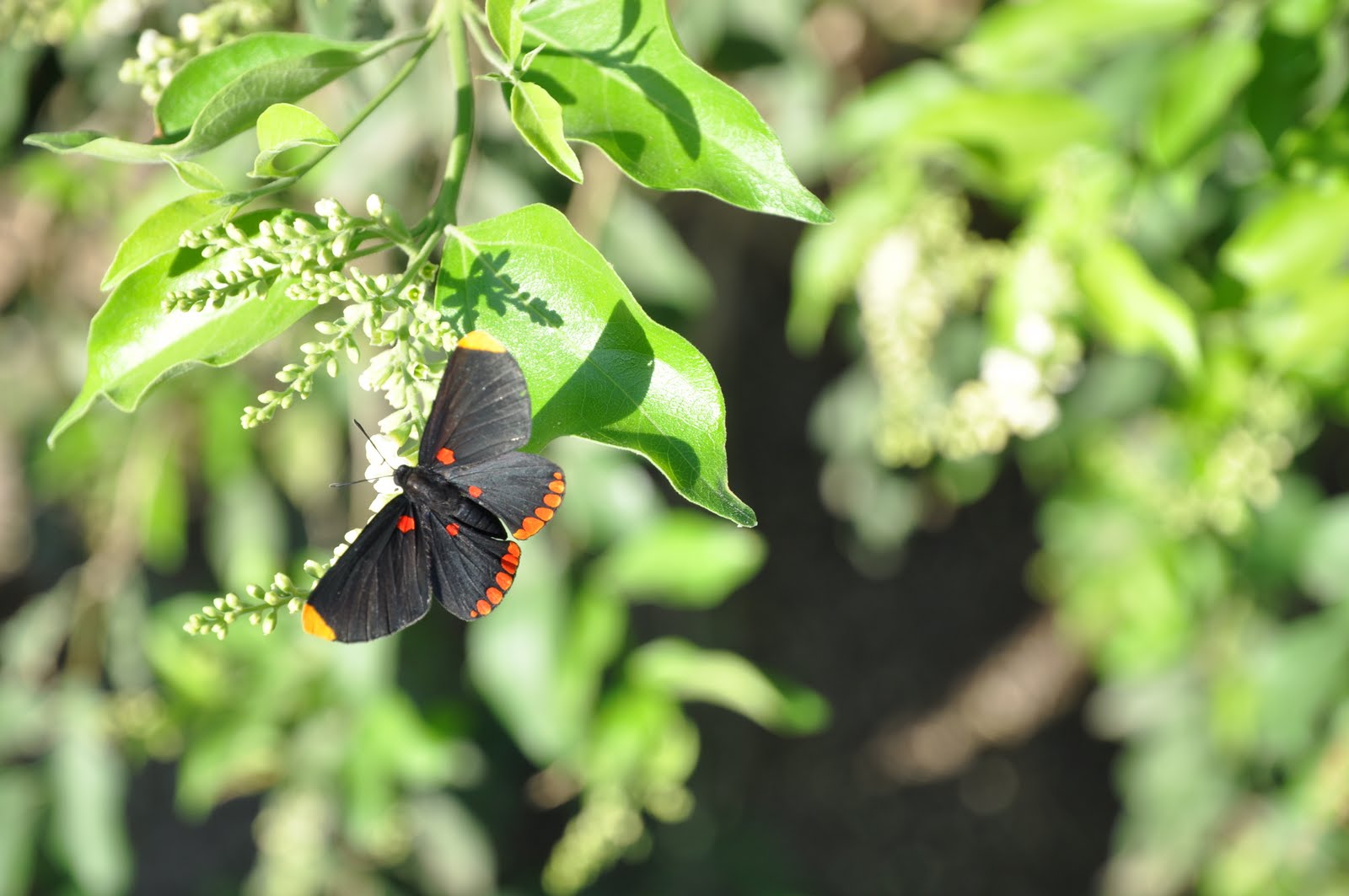
On the last NABA field trip, I got a good look at this Pixie, which hung around for awhile. To me, it looks more like it has dots than borders, but I guess it sort of has a border at the trailing edge of the hind wing. The caterpillar feed on plants in the pea family. It normally occurs from Panama to Mexico and in some of the most southern areas of the US, like the Lower Rio Grand Valley in Texas.

Friday, November 19, 2010

Sickle Winged Skipper


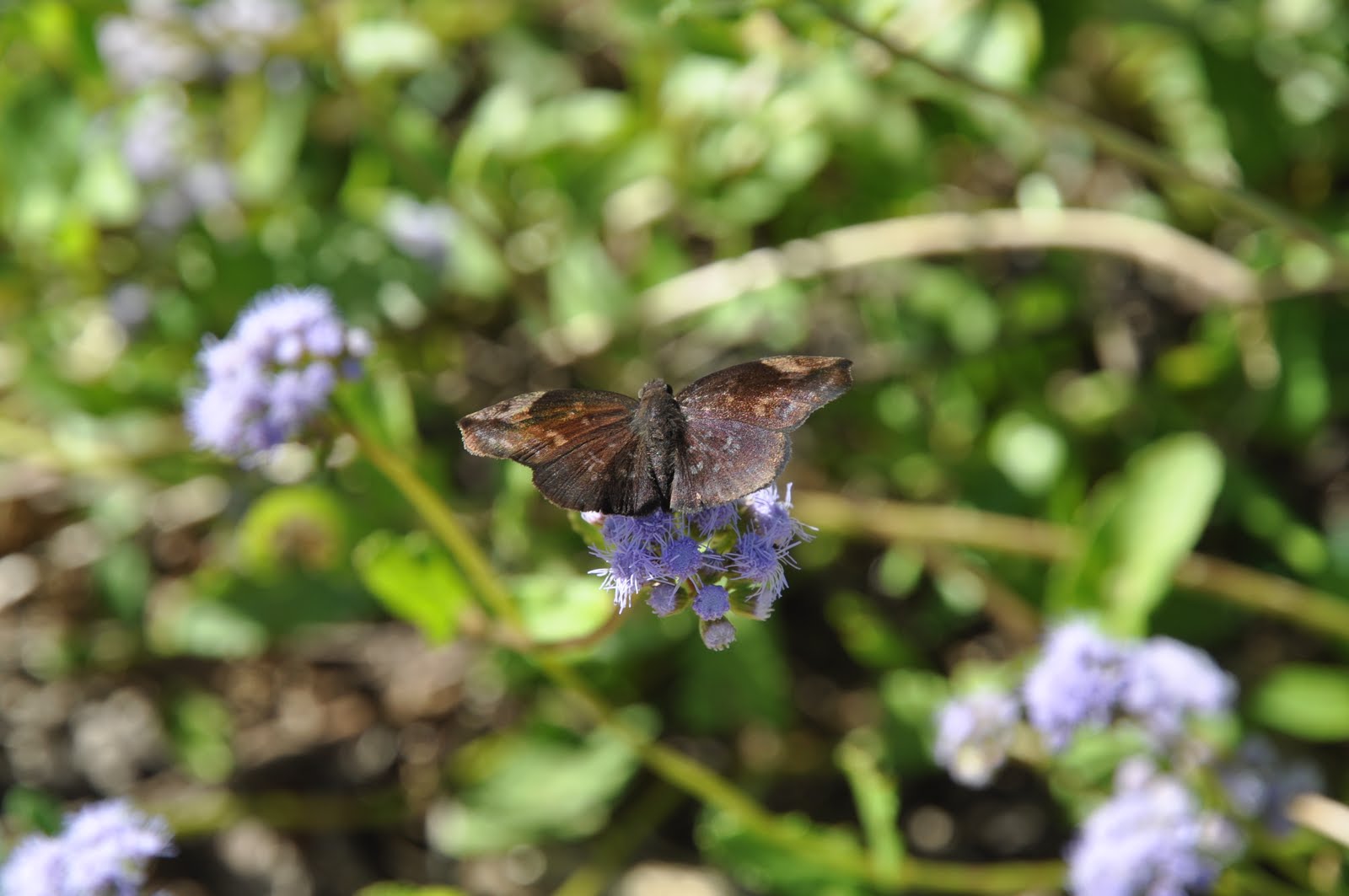
While I was in Texas, I loved all the big beautiful butterflies, but everybody seemed to want to find the LBJs (little brown jobs) to add to their life list. This on, the Sickle Winged Skipper, was lovely in a muted kind of way. It is named for the pale semicircles at the edge of the forewing; supposedly they look like sickles. I don't know. Maybe. It can also be identified by the bit of a hook just below the apex of the forewings. The caterpillars eat citrus and prickly-ash.

This is a spread-wing skipper, meaning that when it rests, it holds it wings open like most butterflies. When folded-wing skippers rest, they fold two wings closer to their body, so you can see all four wings as separate planes.

Thursday, November 18, 2010

Julia


I saw a Julia once before, in a butterfly house in San Francisco. But this one was wild in Texas, so it seemed much more lovely to me. Julias, like Gulf Fritillaries, eat passion vine. Julias don't live in Berkeley like the Gulf Fritillaries, but they do reach as far north as Nebraska. They prefer the southern areas like Florida, Texas and Mexico. This one is a favorite in butterfly houses because it is active all day. Also, the tropical butterflies are used to dealing with the shaded understory, and are not alarmed by the reduced sun exposure under glass. I have seen the more northern species bat themselves against the glass trying to get out, but the tropical butterflies seem cool with being inside. Of course, the many tropical butterflies are big and bright, and people love seeing them, so they are perfect for a zoo situation in that way, too.
Wednesday, November 17, 2010

Western Pygmy Blue


Well, I think it is a Western Pygmy Blue. The spots on the upper surface of the wing make it look more like an Eastern Pygmy Blue to me, but that one doesn't occur in Texas. The WPB the smallest butterflies in the world, about 5-7 mm. It occurs in salt marshes and eats salt bush as a caterpillar. It also lives in other salt areas and eats other plants in the goosefoot family. I'm glad I finally got a good look at this butterfly because now when people ask me about the smallest butterfly in the world, I can say that I have actually seen it.

Tuesday, November 16, 2010

Two Barred Flasher


When it flies, the turquoise sheen is hidden and revealed over and over again, thus, the "flasher" name. It also has two white bars on each forewing, but the second one is hard to see. I got a good look at this beauty while in Texas. The caterpillars feed on Coyotillo, which is in the same family as ceanothus. According to the Butterflies and Moths website, the adults eat nectar. But also bird droppings!!??? Oh my! We love to think of butterflies and flowers together, as in this pic, but sometimes they eat less lovely things, like urine, blood, and now I learn, bird droppings. Butterflies are just amazing!

Monday, November 15, 2010

Xami Hairstreak


This small butterfly was difficult to see because its green wings are so similar in color to the plants. Everybody was excited to see it since it is rare and hard to find in the US. It is common in some parts of Mexico. Pretty little thing! The caterpillars eat succulents like Sedum and Echeveria.

Sunday, November 14, 2010

Green Jay


The birds in Texas were amazing, too. Here is a green jay at a feeder at the NABA park. I think it must be an ordinary bird there, but to me it is a tropical wonder. Those colors! So rich! So much contrast!

Green jays live in Texas, but also in Mexico, Central America and South America.